Friday, July 07, 2006

4th of July

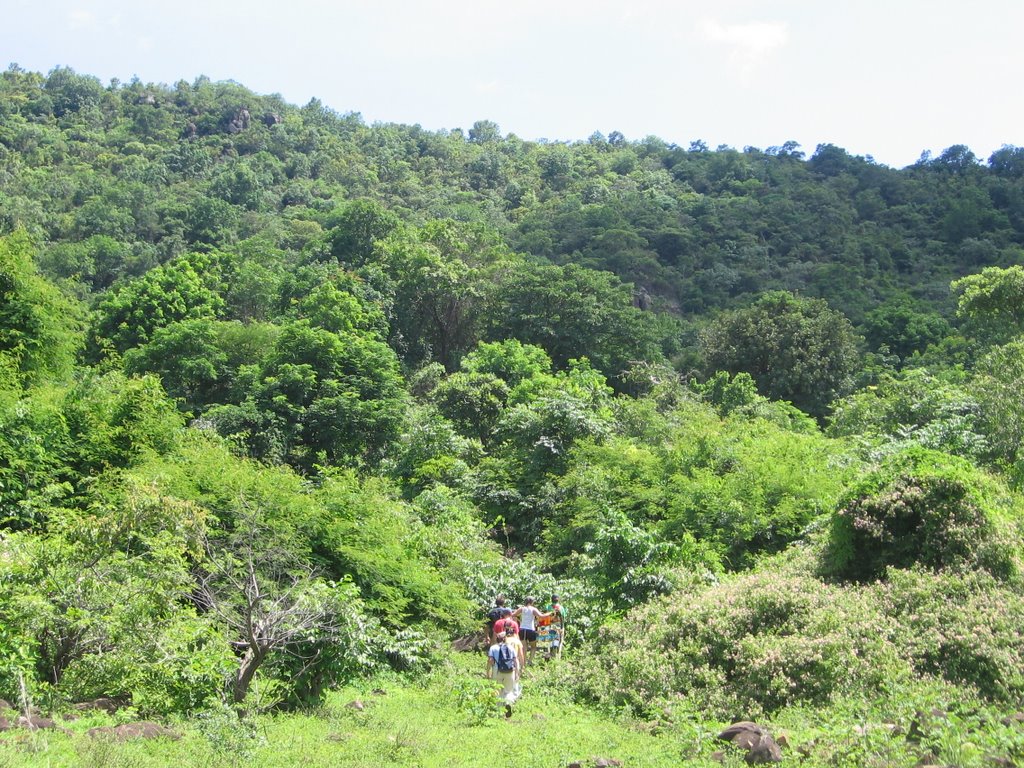
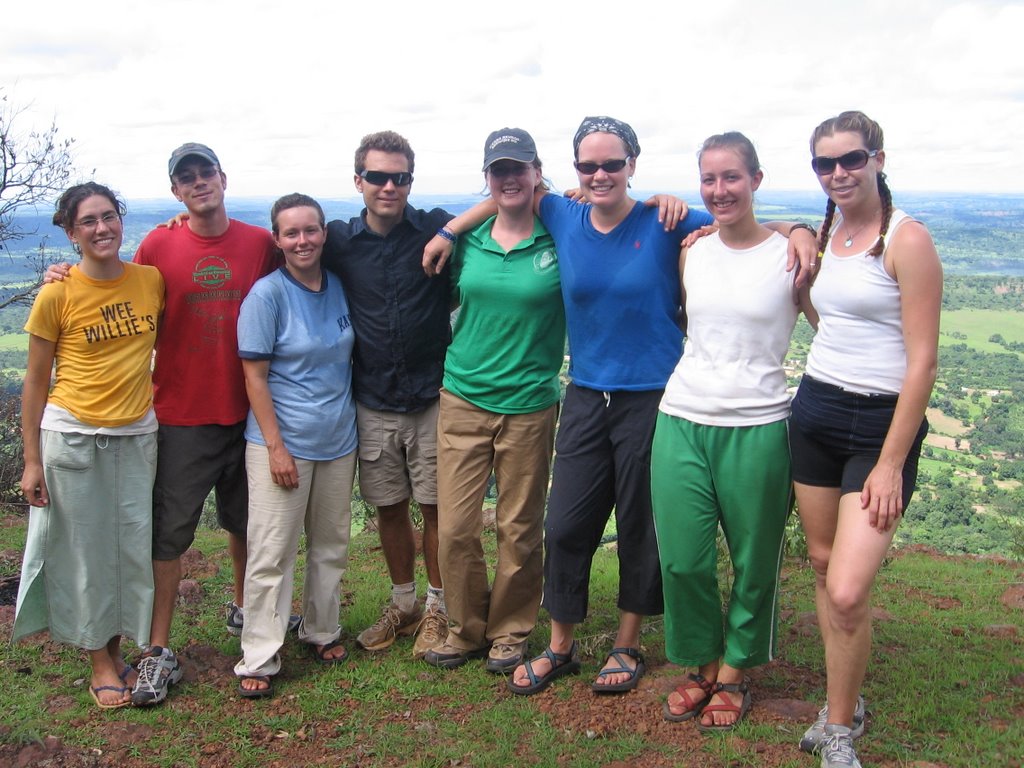
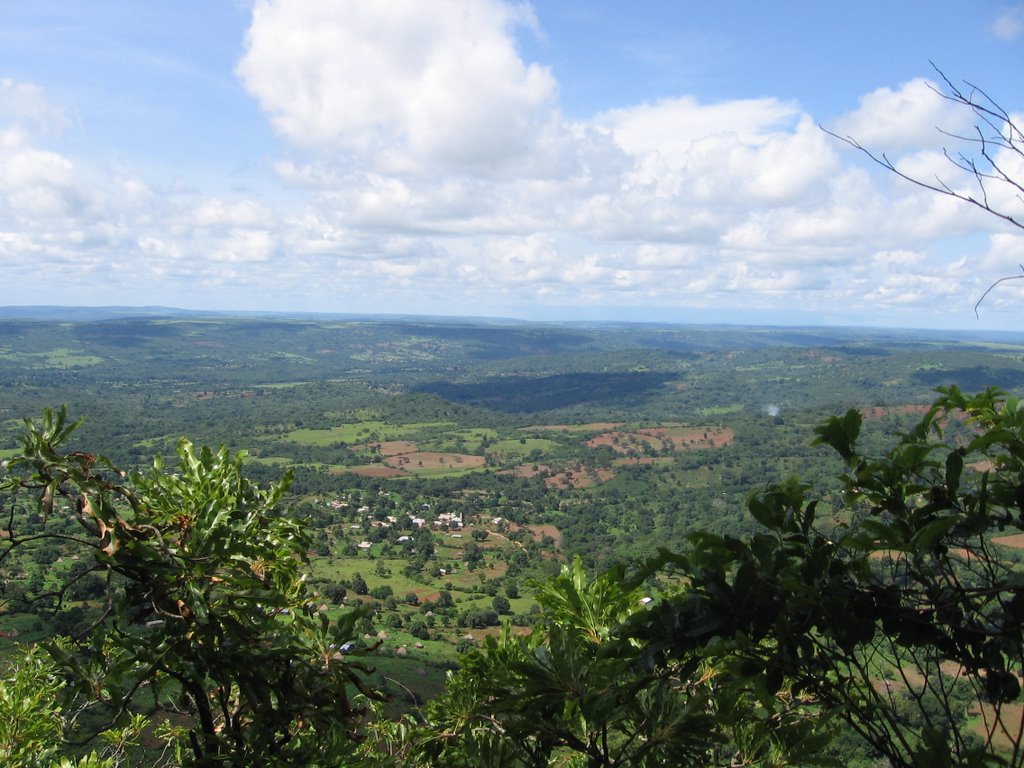
A group of us went down to a friend's village in the hills, northeast of Mamou. We sang the National Anthem and played American football and soccer in the rain. We had a great time celebrating our American holiday as a group of 11. We hiked up the mountain overlooking the site, but didn't spot any chimps. One night we killed and prepared 2 chickens for dinner.


Singing the National Anthem for the 4th

Hiking up the mountain

Hiking group

The view down to Kouru

Out on a rock

Joel and Reid preparing chickens for dinner

What do you do for work?

The rainy season (July-October) is a very busy time for agroforestry. We are outplanting trees for reforestation and for individual concessions. My village is currently planting native trees, Lengue, that have a valuable wood for carpentry. We are planting them near a water source to decrease erosion and protect the area. We are also direct seeding cashew for reforestation. A group of farmers is interested in starting coffee, so we’re preparing a seed germination bed and I’m tracking down seeds from an agricultural research center in the next big town away. My main project is planting moringa trees in individual concessions. The moringa tree is referred to as “the miracle tree” for its high nutritional content, medicinal uses, quick growth rate, use as animal fodder, and enrichment of the soil (nitrogen-fixing). I have approximately 2,000 trees going in my village and the next village over, and we’re working on outplanting them in concessions and educating people as to its benefits. You can prepare the leaves fresh, as in their leaf sauce they serve with rice, or dry them and pound them and use them as a nutritional additive to any dish. Tradition is held in high esteem here and a change from the norm is very difficult. People are already excited about the tree and expressing interest, so I am excited about its prospects here.

I attended a Pular book-keeping training for the farming co-ops in my district, where I introduced moringa to the co-ops and introduced myself as a local resource for technical information. By the end of the day I was frantically copying out local natural pesticide recipes for termites in Pular and handing out moringa trees to outplant throughout the district. Though work is slow-going, there are some days like that one where everything just comes together.

I’m also working with the village on secondary, non-agroforestry projects. They are interested in starting a community library, so we’re going to do a small test-run to gauge interest. The village currently lacks a youth center (Maison de la Jeunesse), found in many other places. They are hoping to start building one soon, and I am looking into outside donor options for audio and electronic equipment (for youth gatherings). Ideally the youth center could house a community library. They have also expressed interest in fencing off the village soccer field, to decrease maintenance costs.

Friday, June 30, 2006

Friends Visit

In June I was fortunate to welcome three visitors from the States to my village. My friend from home, Anna, came with two of her friends from college. We had a great time, despite their visit coinciding with the strikes and riots. It was so interesting to rediscover Guinea again through their fresh impressions.


Lizzie and Jenny (holding Emerson) on my front porch with village girls


Binta leads us to her home the next village over

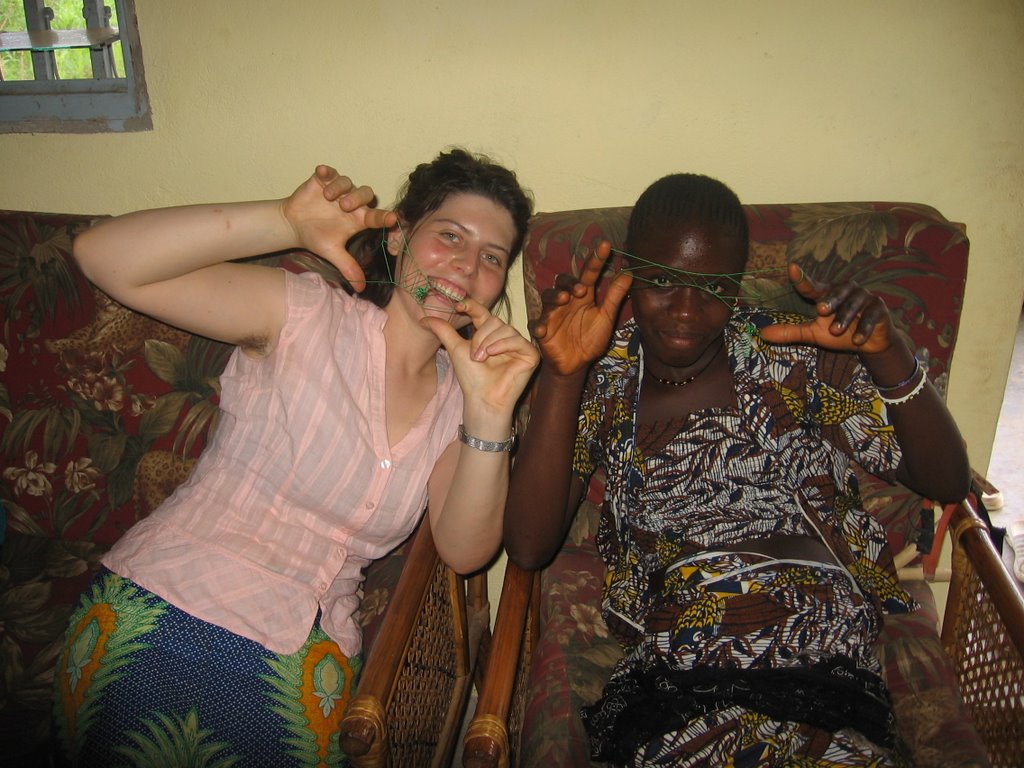
Anna teaches Binta Jacob's Ladder

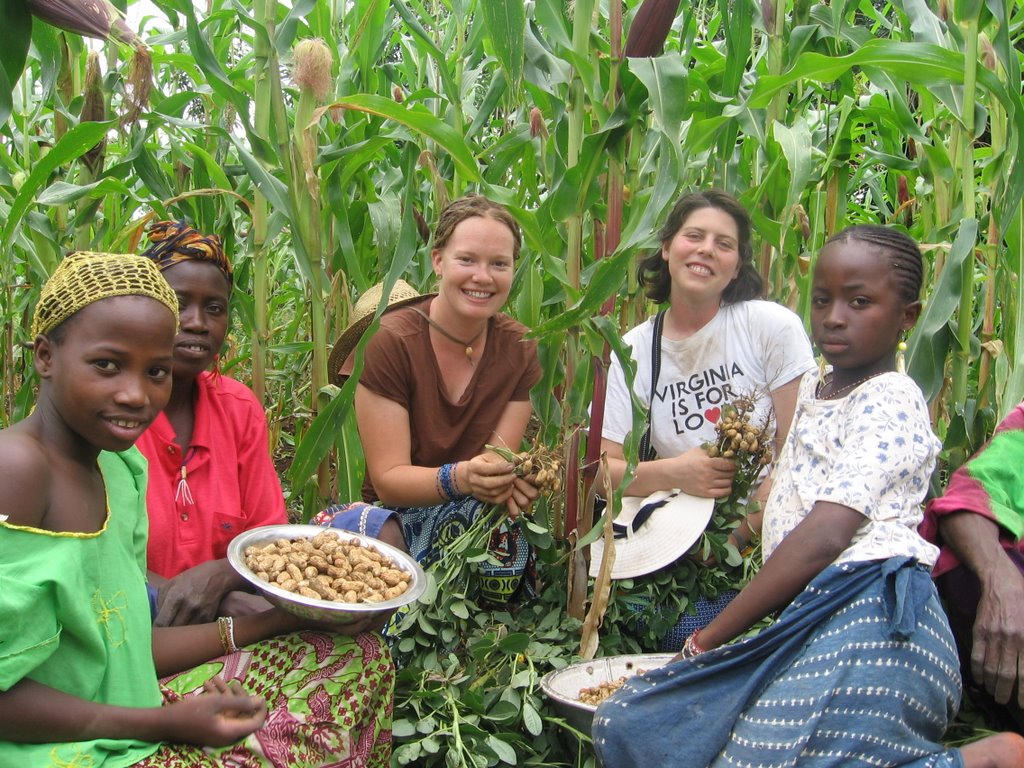
Anna and me harvesting peanuts with Binta's family

Local bricks used for building homes

The village brick quarry

Strike and Riots

Here in Guinea the rainy season is underway. My village went from brown to green seemingly overnight; once dusty paths are now tall rows of corn.

The change in seasons has escalated along with changing attitudes amongst the Guinean people. Gas prices have risen to the point where a government worker's entire monthly salary can not purchase a sack of rice to feed his family. The price of gas increased from 4300 Guinean Francs/liter to 5500 GF/L overnight without warning from the government.

Guineans reacted with a national general strike: no taxis, markets, boutiques, schools, or commerce. The teachers in major cities boycotted the national Bac exam on Monday, June 12th, resulting in student riots that led to at least 5 student deaths in Labe and 10 in Conakry.

The Peace Corps took the appropriate safety precautions, and at no point did I feel unsafe. We watched the Labe skyline from the 2nd floor terrace of the hotel outside of town where Peace Corps volunteers stay. What started as cap gun fire progressed to live ammunition. Plumes of smoke rose above downtown as students burned tires in the streets. The military proceeded to walk through the quartiers of the city, firing live rounds into the air of intersections to enforce a street ban. A Peace Corps guard's wife was sleeping in her bed when a bullet went through her roof and into her bed frame. Luckily, she was uninjured.

While we were sitting on the terrace, three military men walked by and shot a round in the air at the intersection in front of the hotel. A man walked by from their direction carrying two large mangoes. He looked up at our terrace and said in English with a smile "Don't be afraid" and continued on his way home. As the riots downtown turned violent, we watched women in neighboring concessions continue their laundry. It was all very surreal.

The government and union leaders have finished negotiations and life is back to normal for the moment here in Guinea. In my village the only way you would know unrest was going on in the big cities was our lack of bread (usually trucked in from two nearby towns). I had three visitors from America with me for the last few weeks, and they definitely got an interesting view of life here.

Tomorrow morning I head back up-country to my village, where I'm out-planting moringa trees. Moringa trees' leaves have a very high nutritional content, so I am encouraging local women to use the leaves in the leaf sauce they serve with rice. We are also working on planting coffee and cashew.

Fish Fete

I met up with Marie, a volunteer friend from the Basse Cote (western coastal region), and traveled out east to Haute Guinea. We met our friend Amanda in her small village, Selouma. It was a great mini-reunion. We went on a walk beneath the mountain overlooking her village (with chimps on it!) and slept in her hut, before continuing on to the regional capital of Haute, Kankan.


Marie and Amanda in Selouma

I expected Kankan to be hot, dusty, and dry, but it was quite green, the streets lined with trees. We enjoyed catching up with volunteers out in that region that we don'’t get to see that often. We visited local craftsmen and I bought wood and cowbone necklaces and passport masks from the forest region. The ebony wood craftsman let Marie try working some ebony.


Marie working ebony in Kankan

We taxied out for the weekend for the fish fete, an annual celebration in many villages off the Niger River. The festival celebrates the start of fishing season for the ponds formed in the floodplain of the Niger. They celebrate fish fete right before the rainy season washes the Niger back into the floodplain, emptying the ponds of their fish. Drummers and dancers come for the celebration.


Dusty after the taxi ride

Sharing a bowl of rice and sauce

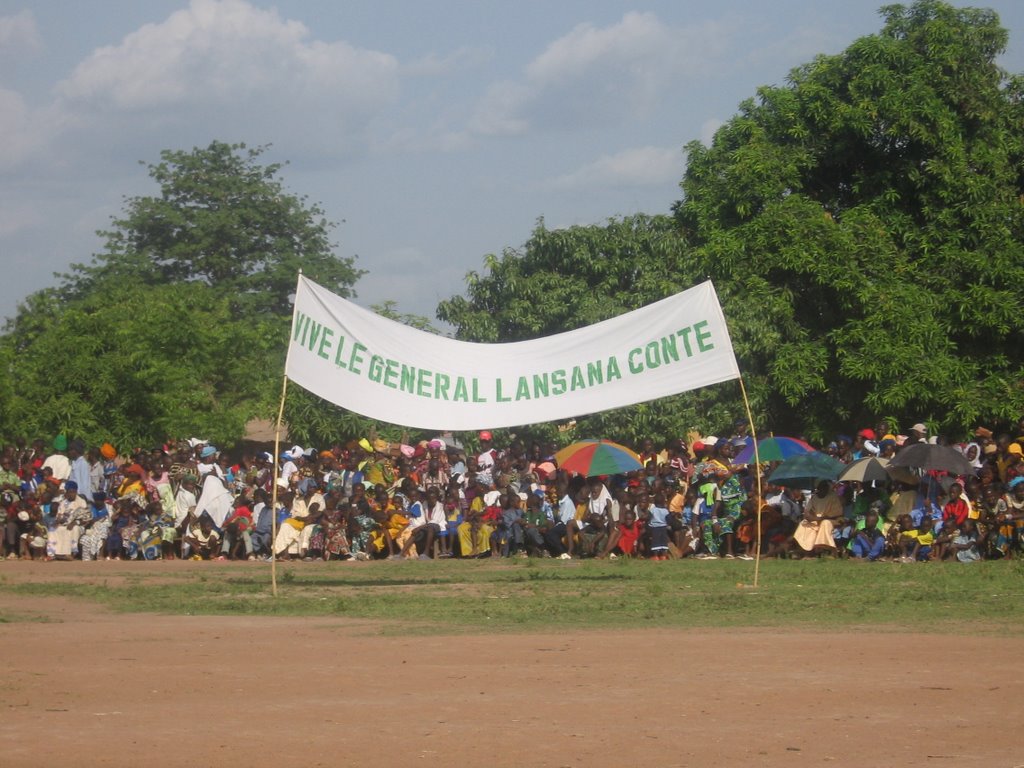
We went to a small village named Nounkounkan. There was a huge opening ceremony where all of the performance groups in attendance did a short introduction. There were dancers, singers, traditional instruments, skits, and drummers. They even made the Peace Corps do a performance, so we disco-walked out in the circle and did the macarena with an AIDS prevention chant. Embarrassing, but hilarious. Each evening had small circles of drumming and dancing throughout the small village. We got stuck in a downpour and took shelter with a group of musicians playing the kora, a traditional instrument, and danced until the rain stopped.


After a few days of dancing and drumming, Sunday morning the village made the call to fish. Everyone streamed down the path to the fish pond, carrying fishing implements. People rushed the water all at once and fishing began. It was a madhouse, the water packed full with people. I walked the perimeter of the lake and a man threw me a big fish from the water. From then on everyone there thought I had caught a fish and were quite impressed. A group of sword dancers singing and shaking their swords in single file around the lake changed their song to "the white girl caught a fish"” in Malinke.


After the fish fete ended, a few of us continued on to a neighboring village, Niandankoro. We swam and did laundry in the lazy Niger and slept in our friend's hut. Her homestay family served us the main dish, To, made of pounded manioc, spongy and slimy in consistency. They serve it with a salty green sauce. Her homestay mom gave birth to her 13th baby that night!


Walking to Melinda's hut in Niandankoro

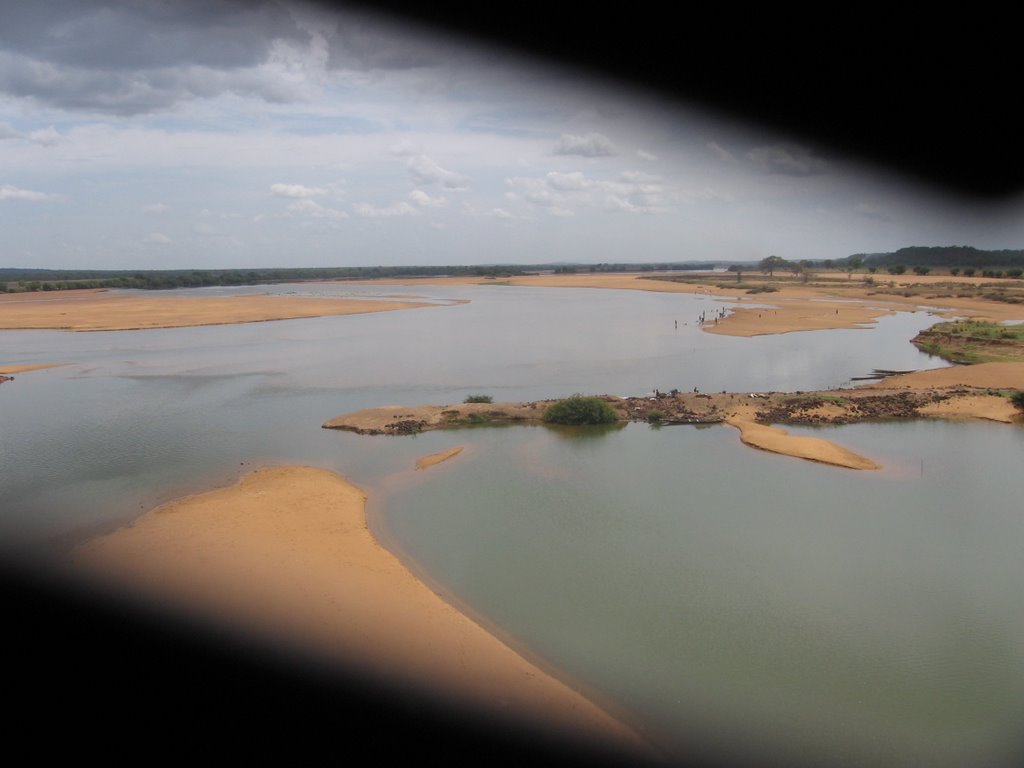
The Niger River

Colin carrying laundry back to the hut

Thursday, June 29, 2006

Puppy and Mali-ville


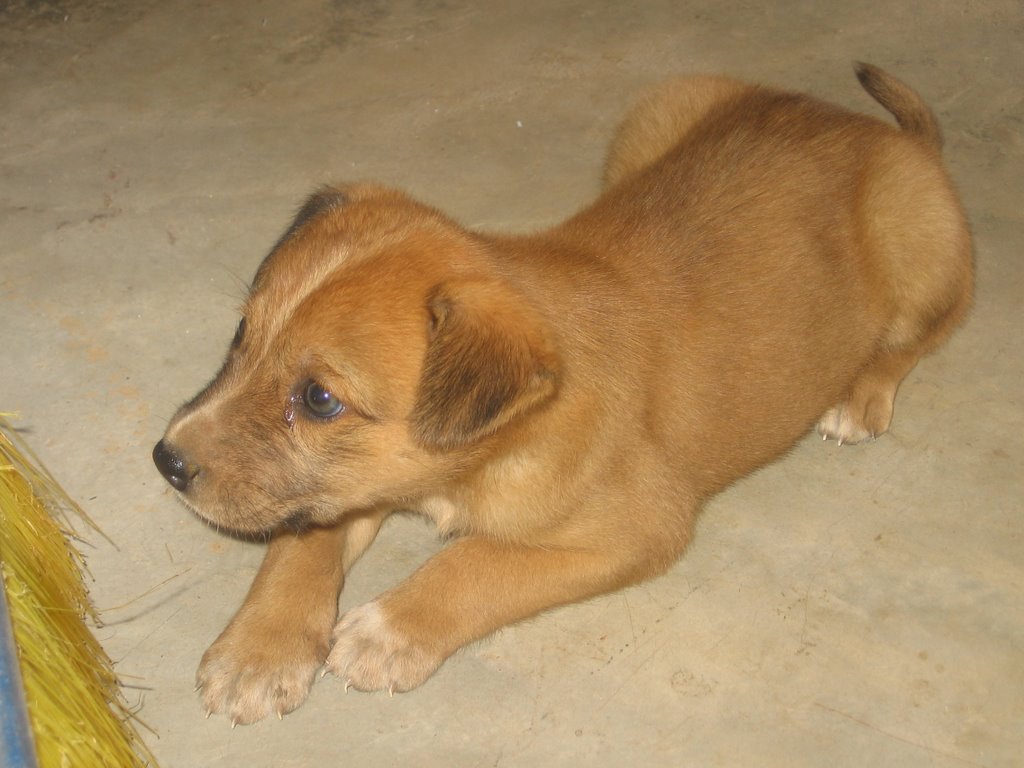
A friend in Labe found a puppy in the street and gave her to me. I biked her home in a cardboard box on the back of my bike. Later that week she biked to my neighbor’s site for a weekend dinner party. She’s quite an adventurous pup. I called her Seeda (say-duh, it means “small” in Pular), and then when she got bigger, Emerson. She loves romping around the corn field in my front yard, going on walks, and runs in the countryside. She also travelled up to Mali-ville in the north for a weekend. We went up to check out our friend Molly’s Family Planning Campaign, which finished up with a soccer tournament.

Thursday, June 22, 2006

G11 Moves to Site

After my 24 day initial settling-in period, I made a quick trip down to the capital, Conakry, to reunite with G11 and attend the affectation ceremony, when they were sworn in as volunteers. Peace Corps Guinea was celebrating its 20th year in Guinea, and Peace Corps overall was celebrating its 45th anniversary. Many visiting officials attended and the Peace Corps Guinea staff wore matching outfits in African fabric.


The new Fouta volunteers were welcomed to the Labe regional house by a group of Fouta volunteers, who made sure we were all well fed and having a great time as G11 prepared for the big move. One day we all traveled to Porto Falls, a waterfall about an hourÂ’s drive north of Labe, for a day of relaxation and good times.

Wednesday, June 21, 2006

To the Village, On Strike

After site visit I went to my regional capital, only a 35 minute car ride away (on a good day, depending on the car), to say my goodbyes to the rest of my training group. It was exciting to hear the stories of first impressions of where each volunteer would spend their two years. One of my friends got sick on her work colleague’s floor, where she had to spend the night!

And so I began that first bit at site, which every prospective volunteer eagerly anticipates during training and dreads at the same time. Guineans nation-wide went on a strike during my first week alone in my village. The price of a sack of rice had exceeded a government worker’s salary, so they were striking for salary increases. Markets were closed in big cities, taxi transport ground to a halt, and government workers (including teachers) stayed home. Though there weren’t cars running on the dirt road of my village, and kids didn’t have school, you could barely tell there was a strike in my village.

On market day, women walked from across the district carrying produce and goods as per usual. At one point a local government official drove through town on his way to a meeting and chaos broke out in the market. Everyone rushed to gather up their goods and flee, afraid that they would be beaten for boycotting the strike. My house sits right behind the market. I was entertaining a couple of teenage girls on my porch when suddenly women came running through the alley-way from the market, produce tumbling from the sacks they were gathering up as they ran. It was just a miscommunication and the market resumed. Later I biked the 1.5 hours to Labe to celebrate my birthday. After 5 days of striking, an agreement was reached with the government and the strike ended.

I settled in at site for 24 days. Though there were times of boredom, confusion, frustration, and helplessness, I was so excited to finally start my service. I worked on the local tree nurseries, greeted in Pular, entertained visitors on my porch, and settled into my house. Despite the challenges, it didn’t take long to realize that my village was a perfect match for me.

I live in a small village that serves as the market hub for even smaller villages in the countryside of my district. Depending on their location, some people also go to markets 7km and 12km away on the weekend, mostly by foot. My house is alone in a walled yard, which gives me some degree of privacy. The Peuhls (the ethnic group of my region) are notoriously calmer and quieter than other ethnic groups, which really helps when living in a fish bowl for 2 years. I have a village telecentre (a staffed phone booth), which makes communication with the Peace Corps easy. I have even received phone calls from my family, though it is so difficult to get through, we now wait for my trips to the regional capital. Though the Fouta Djallon is densely populated, I can still wander in the rolling hills of the countryside in any direction from my village center. I also have Peace Corps volunteer neighbors 12km, 29km, and 35 km away. A listening ear (in English!) is just a short bike ride away.


Planting a tree nursery


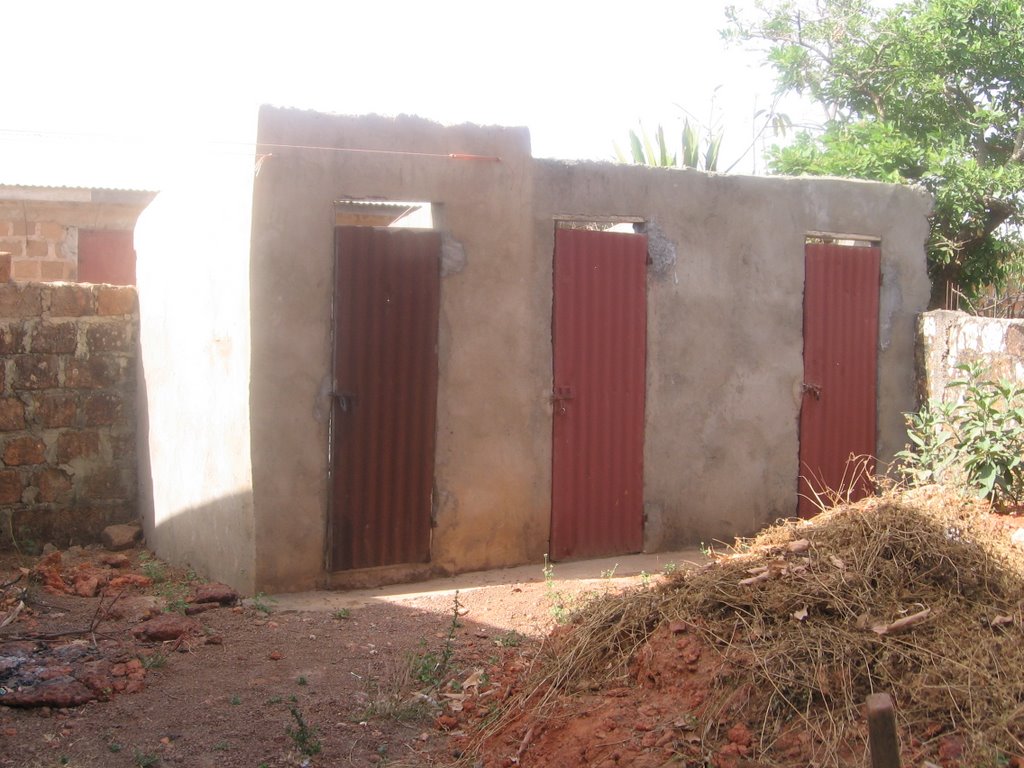
My latrine


Backyard latrine and shower


The office


My front yard (dry season)


Village girls on my porch


Main room


Main room


Fields outside of the village


The road my house is on


Danielle (the previous volunteer) and I outside of Hinde

Friday, January 20, 2006

Training Part Deux

January 12th I met the new group of Guinea volunteers (G11) in Philadelphia for a few days of general introduction before our flight to Conakry via Brussels. G11 includes 37 public health, agroforestry, and small enterprise development volunteers from across the United States, aged 21-38. We flew above the western mangrove swamps on our way to Conakry. We didn’t see a car, road, person, house... any sign of life... for most of the ride until we hit Conakry. We were murmuring on the plane, wondering just what we were getting ourselves into. Darkness descended and we left the tiny airport for the Conakry night. We were suddenly engulfed in the smells of the capital, overpowered by the stench of burning garbage. Candles flickered all around us as women fried snacks. We piled into our big white bus and drove through the candlelit night to the Conakry office and volunteer transit house. The next day we bussed up-country to a forestry school in Mamou for a few days of general Guinea orientation. The climate changed from hot and muggy to chilly in the evenings in the hills. We learned what not to do (give things with your left hand, for example) and how to perform the most elementary of things (using a squat latrine and showering with a bucket).

A few days later we were piling back into the bus. We drove back west and then south towards Sierra Leone. Lush and tropical, we crossed a bridge over the wide river, drove down the tree-lined road from the market, and entered our new training site office. We had arrived in Foracariah, our home for the next 12 weeks. We nervously changed into our best outfits for the community’s welcome ceremony. The Peace Corps and community officials gave brief speeches, and we chose a member of our training group to deliver a speech in French to our new homestay families.

As they called out our names one by one, we sat with our new homestay families. My new mom brought her tiny young baby, Issiaga, to the ceremony, along with my dad and aunt. Next we dragged our luggage to our new homes, embarassed by the display of sheer wealth in comparison to our new surroundings. We wove between concrete house and mud huts down a hill for awhile and I wondered how I would ever find my way to and from the house for training. The family gave me my own room; the kids all shared mats on the floor in the storage room and my parents slept in their room with the baby. We had a four-room house, with a nicely decorated living room and latrine and shower area out back.

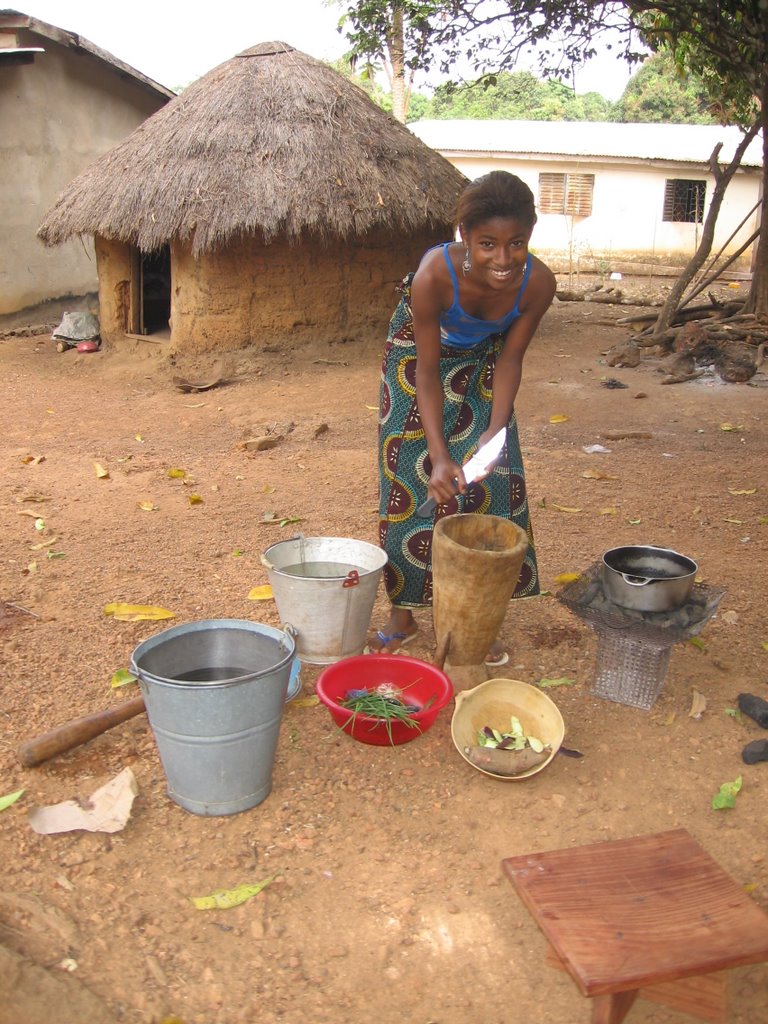
Sometimes I would go to the market with my mom on the weekends to buy produce to make sauce for the rice. I helped pound the vegetables for sauce, pulled water from the well, learned to do my laundry with a washboard, and played with my homestay siblings. My family knew I was working on improving my local language, Pular, and worked to speak with me in Pular instead of French.

Training consisted of group sessions to learn cultural norms, medical self-treatment, security, and logistics. We broke off for smaller groups for sectoral learning (agroforestry in my case) and language learning. Once achieving a certain level of French, volunteers began local language classes. I attended some French classes in the beginning, but chose to continue Pular study on my own. Soon I would return to the village I was previously assigned, so I knew which local language I needed to learn. The new trainees studied French and waited a month before their sites were announced so they could start local language training.

Though a second round of training was at times repetetive and frustrating, I was glad to integrate with the new group of volunteers with whom I would spend my 2 years of service in Guinea. My friends from the previous group helped out with the training in one-week segments, so it was also a wonderful opportunity to reconnect with them. After 6 weeks of training, Peace Corps agreed that I was ready to begin my service at site. Our training group went to see our sites for the first time for a week-long site visit with neighboring volunteers. I had a rare opportunity to do my site visit with the volunteer who was finishing up her service at my site. It was amazing to hear her perspective after 6 months in my village for work projects and insight about community members. She and her husband, who had recently returned to the States to start his new job, had prepared tree nurseries for me in the village. It really helped to have a small project up and running to keep me occupied and focused. The leaders of the village held a ceremony for the two of us, to celebrate her departure and my arrival. We gave them packets of kola nuts, a caffeinated nut traditionally used for ceremonies and given as a sign of respect.


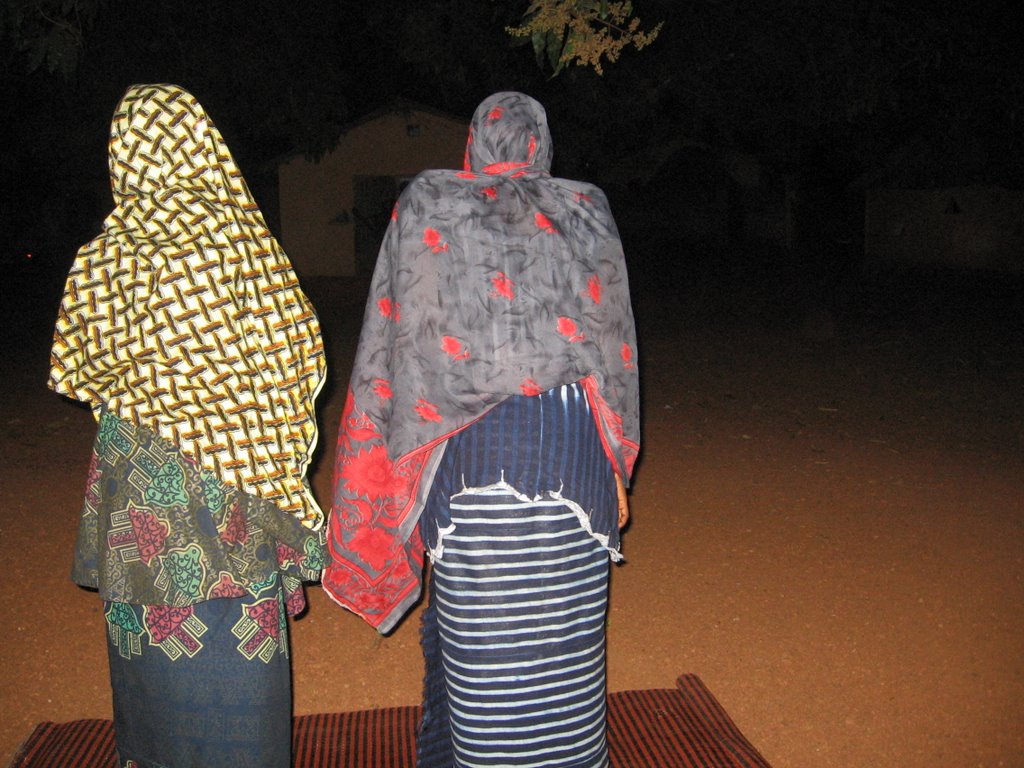
Homestay women praying


Homestay siblings on the way to school


Laundry in the concession

Laundry


Homestay living room
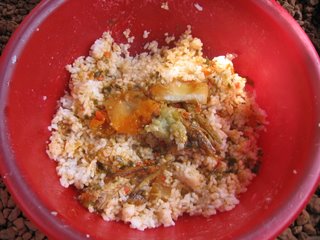

Rice and fish sauce


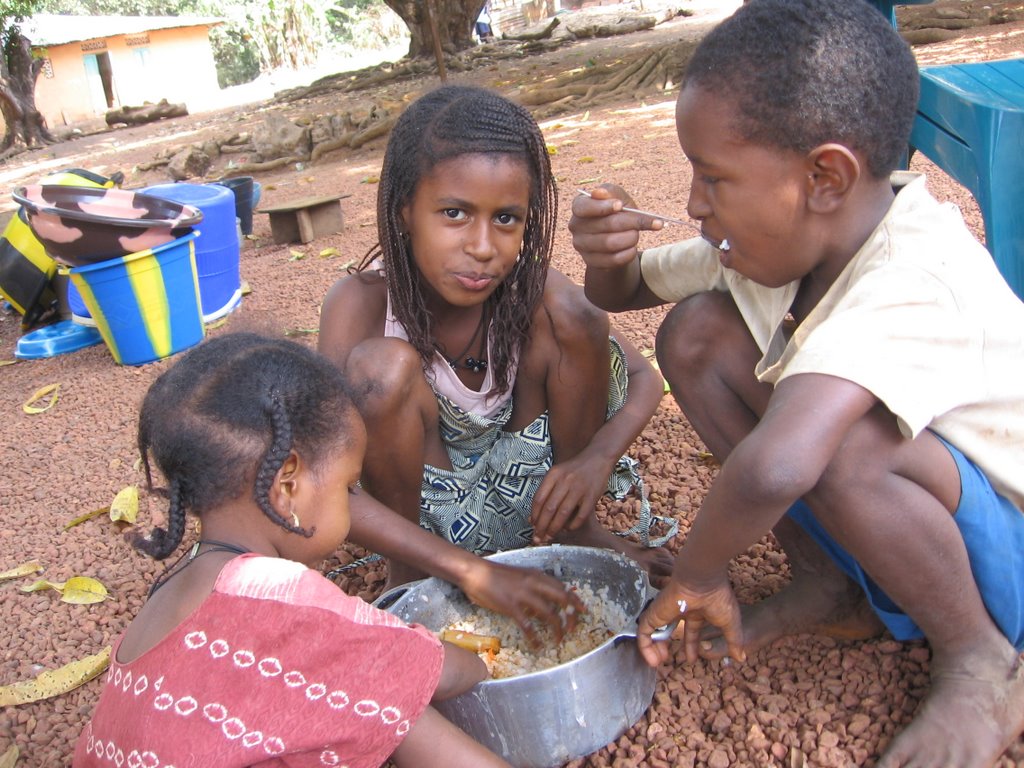
Siblings eating


Siblings with oil palm fruits


Pounding vegetables to prepare sauce


Sauce ingredients


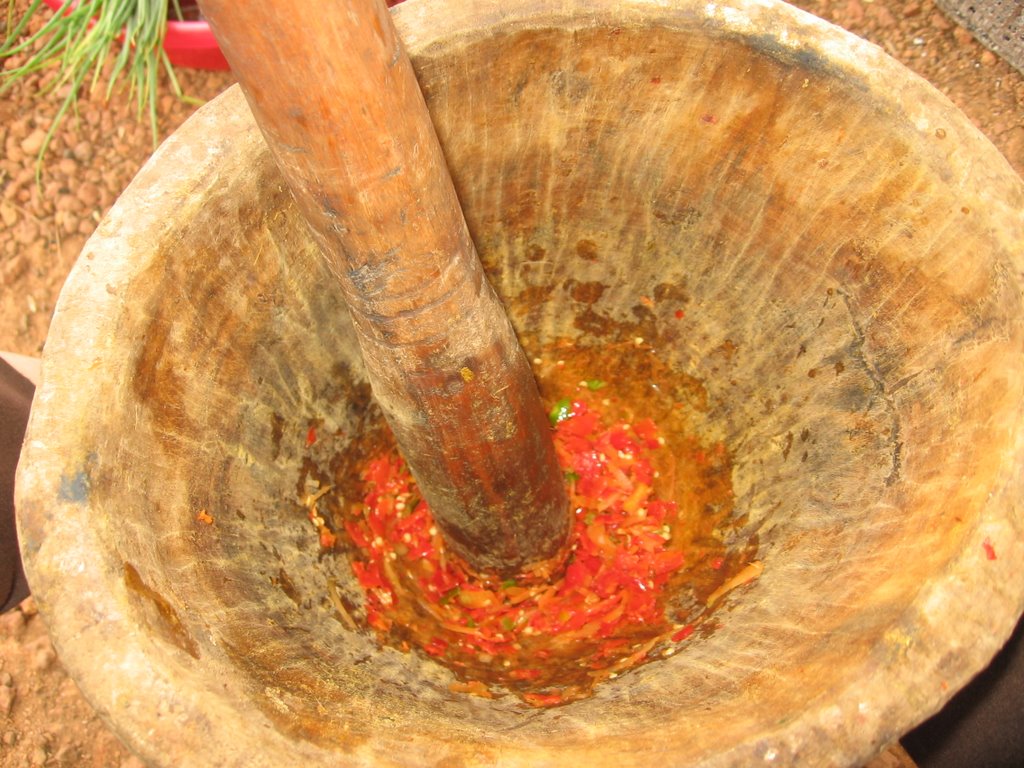
Pounding hot peppers in the mortar


Fatimatou preparing lunch
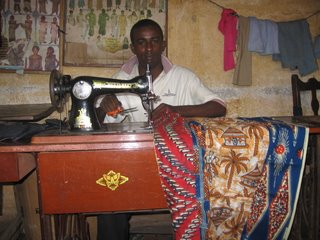

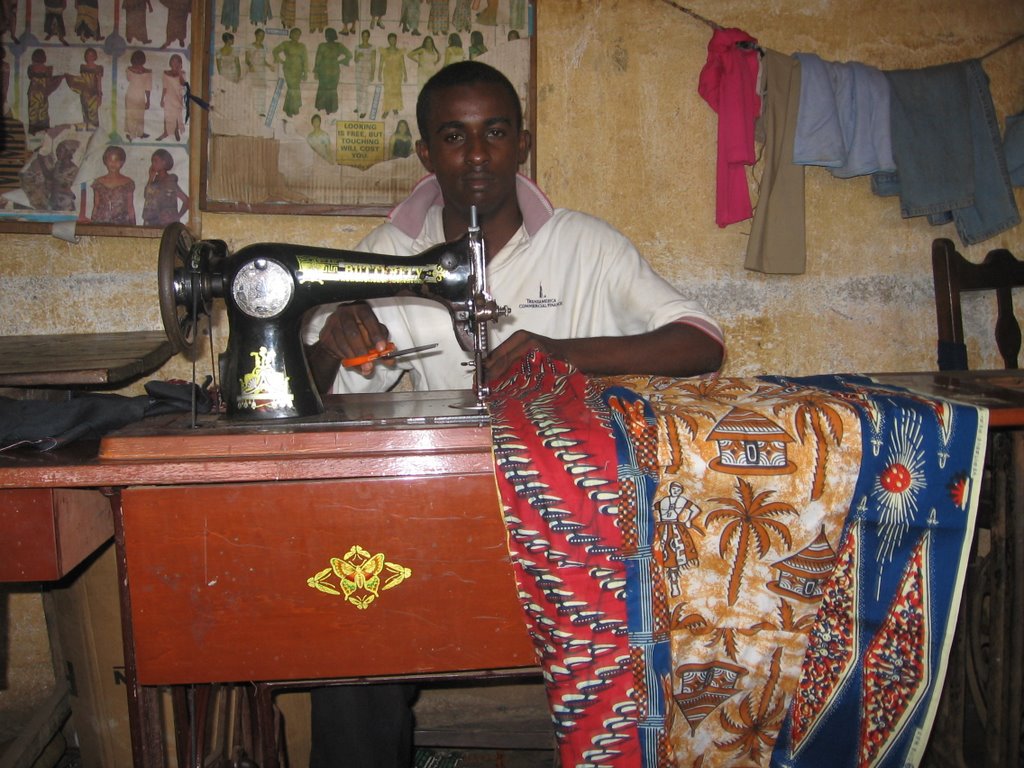
Tailor


Selling hot peppers in the market


Going to the market


In the market


Trip to the beach, rusted ship


Bridge to the beach
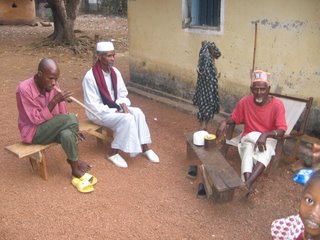

Homestay elders, man on left is brushing teeth with the toothbrush tree


Diamond mine wastewater


Diamond mine camp
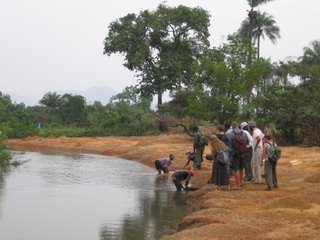

Diamond mine river


Craig and Ali in Guinean clothes


Ali in Guinean clothes


Alex and Rachel in Guinean clothes


Rob and Joel in grand boubous


Joel and Diana in Guinean clothes


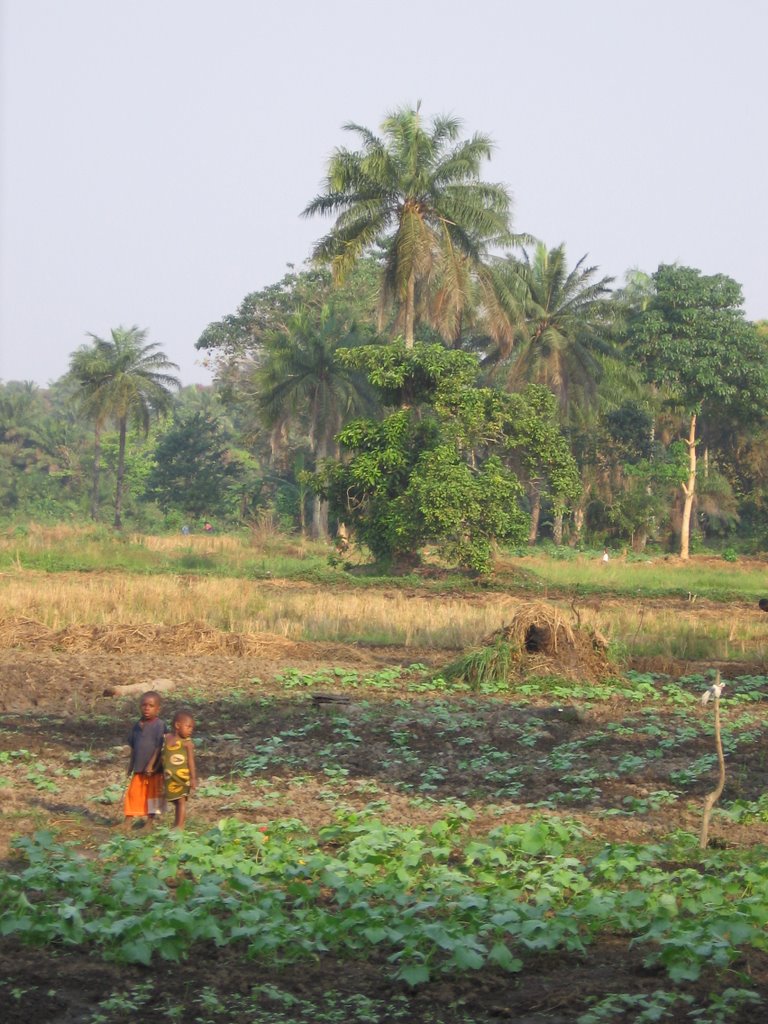
Foracariah gardens


Foracariah road


River